

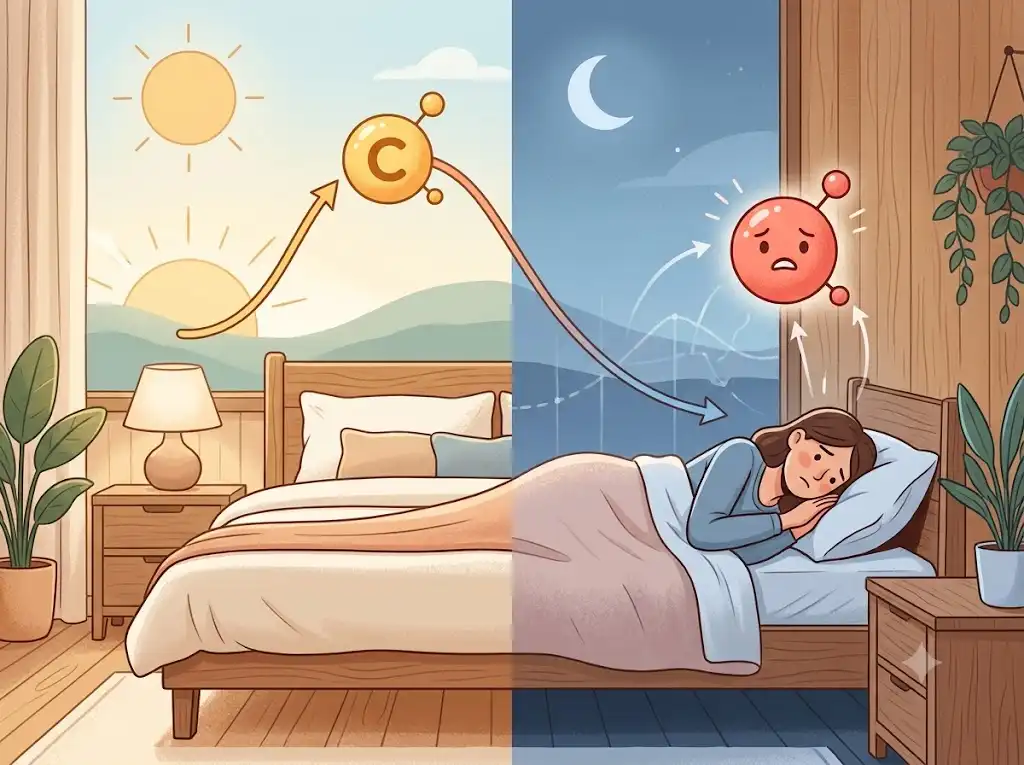
Cortisol, often labeled “the stress hormone,” actually follows a healthy daily rhythm: it should peak shortly after waking, giving you energy and alertness, then gradually decline through the day, reaching its lowest point around bedtime.
Chronic stress disrupts this rhythm. Instead of tapering off at night, cortisol can stay elevated, keeping the nervous system in a low-grade “alert” state exactly when it should be winding down. This shows up as trouble falling asleep, waking at 3 or 4 a.m. for no clear reason, or sleep that feels shallow and unrefreshing.
The relationship runs both ways — poor sleep itself raises cortisol the next day, which can make the following night harder too, creating a cycle that’s difficult to break without intervention.
A few evidence-supported ways to interrupt this cycle: a consistent wind-down routine starting 60–90 minutes before bed, dimming bright light in the evening (which delays melatonin release), and avoiding caffeine after early afternoon, since its effects can quietly persist for 8–10 hours.
For people under ongoing stress, sleep issues often won’t fully resolve through sleep habits alone — the underlying stress usually needs its own attention too.